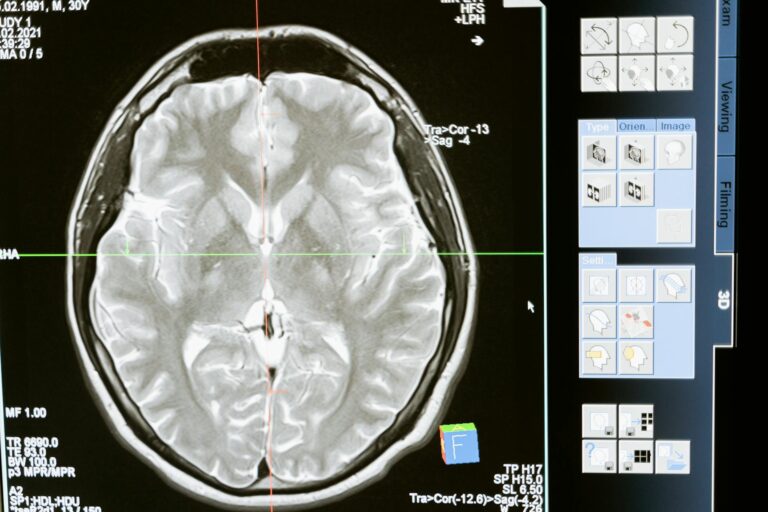
Mild atrophy on a brain MRI refers to a slight loss or shrinkage of brain tissue visible in the scan. Atrophy means that some parts of the brain have reduced in size, which can happen naturally with aging or due to various medical conditions. When described as “mild,” it indicates that the shrinkage is not severe and may be subtle, often involving a small decrease in the volume of gray matter (the brain’s outer layer responsible for processing information) or other brain structures.
This mild atrophy can be seen in different areas of the brain and may be associated with early or mild stages of neurodegenerative diseases such as Alzheimer’s disease or frontotemporal dementia. However, mild atrophy alone does not confirm a diagnosis; it is one piece of information that doctors consider alongside symptoms and other tests. For example, in Alzheimer’s disease, brain atrophy tends to progress over time and is linked to memory loss and cognitive decline. In frontotemporal dementia, atrophy often affects the frontal and temporal lobes and may cause changes in behavior and executive function[1][2][3].
Mild atrophy can also be part of normal aging, where some brain volume loss occurs without significant impact on daily functioning. The degree of atrophy and its location help doctors understand whether it is likely related to a disease process or just age-related changes. Additional clinical information, cognitive testing, and sometimes follow-up imaging are used to monitor progression and guide diagnosis.
In summary, mild atrophy on a brain MRI means there is a small amount of brain tissue loss visible on the scan. It can be a normal finding in older adults or an early sign of neurological conditions, depending on the context and associated symptoms.
Sources
https://bestpractice.bmj.com/topics/en-gb/317
https://en.wikipedia.org/wiki/Frontotemporal_dementia
https://www.britannica.com/science/Alzheimer-disease