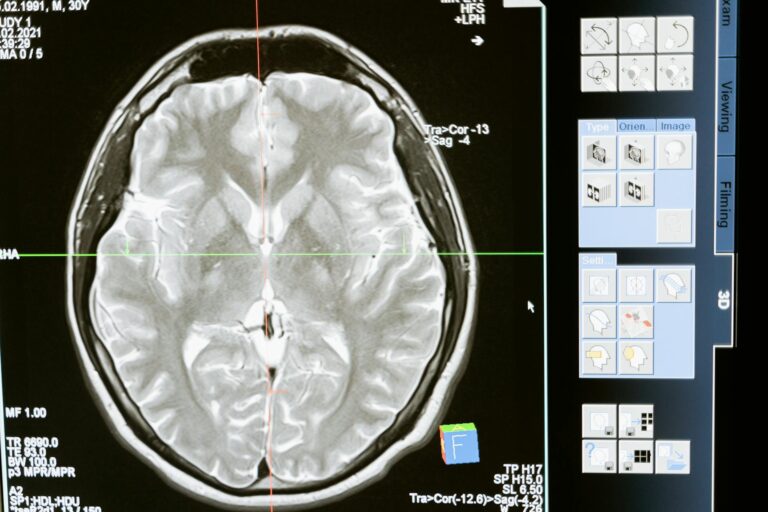
Ischemic changes on an MRI refer to areas in the brain where blood flow has been reduced or blocked, leading to a lack of oxygen and nutrients. This condition causes damage to brain tissue because cells cannot function properly without adequate blood supply. On MRI scans, these changes often appear as abnormal signals indicating tissue injury or death due to this insufficient blood flow.
The most sensitive MRI technique to detect early ischemic changes is Diffusion-Weighted Imaging (DWI). DWI identifies areas where water movement in brain cells is restricted, which happens soon after blood flow stops because the cells swell and trap water inside. These areas show up as bright spots on DWI images and dark on the corresponding Apparent Diffusion Coefficient (ADC) maps. This pattern helps doctors confirm acute ischemic stroke within minutes to hours after symptoms begin[1].
Ischemic changes can result from various causes, such as a blood clot blocking an artery (thrombotic stroke) or a clot traveling from another part of the body (embolic stroke). These blockages prevent oxygen-rich blood from reaching brain tissue, causing cell injury or death. Over time, if blood flow is not restored, the damaged area can grow, leading to more severe neurological problems[3][4].
In some cases, ischemic changes seen on MRI may represent older, chronic damage from previous small strokes or ongoing small vessel disease. These chronic changes appear differently on MRI and indicate long-term effects on brain health, such as cognitive decline or motor difficulties[7].
Ischemic changes are not limited to the brain. For example, ischemia can affect the optic nerve, causing vision loss due to insufficient blood supply. This condition, called posterior ischemic optic neuropathy, shows how ischemia damages tissues by causing swelling and compression in confined spaces, worsening the injury[5].
In summary, ischemic changes on MRI highlight areas where blood flow disruption has caused brain tissue injury. Detecting these changes early is crucial for timely treatment to restore blood flow and minimize permanent damage.
Sources
https://www.stroke-manual.com/mri-dwi-in-stroke-diagnosis/
https://www.frontiersin.org/journals/stroke/articles/10.3389/fstro.2023.1165231/pdf
https://www.physiotattva.com/blog/cerebrovascular-accident-causes-symptoms-and-treatment
https://en.wikipedia.org/wiki/Posterior_ischemic_optic_neuropathy
https://www.droracle.ai/articles/528405/what-is-the-diagnosis-and-treatment-for-a-patient