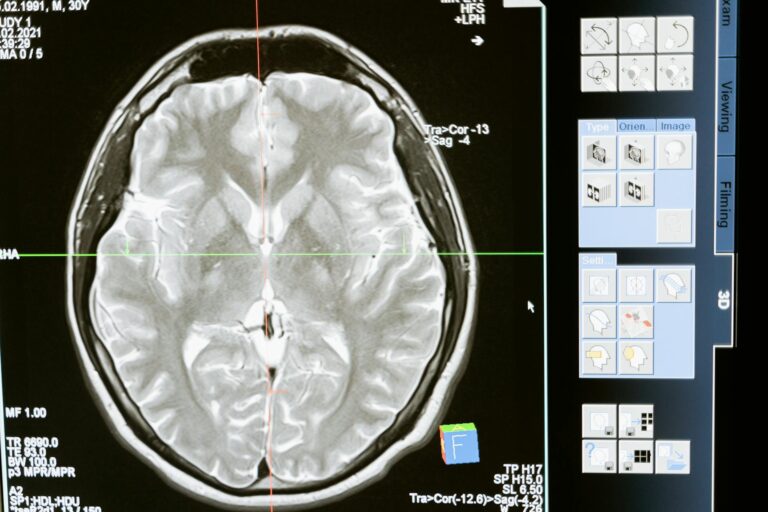
Infratentorial on an MRI refers to a specific location in the brain. Understanding this term helps patients and their families grasp what doctors mean when they describe brain imaging results.
The brain sits inside the skull and is divided into different regions. One important dividing line is a membrane called the tentorium. This membrane separates the upper part of the brain from the lower part. When doctors use the word “infratentorial,” they are talking about structures that sit below this membrane.
The infratentorial region includes the cerebellum and the brainstem. The cerebellum is the part of the brain that controls balance, coordination, and muscle movement. The brainstem connects the brain to the spinal cord and controls vital functions like breathing and heart rate. These structures are located at the base and back of the brain.
When an MRI scan shows an infratentorial lesion or tumor, it means there is an abnormality in one of these lower brain structures. Lesions appear as areas of different signal intensity on the MRI images. In multiple sclerosis, infratentorial lesions show up as T2-hyperintense areas, which means they appear bright on certain types of MRI sequences. These lesions can occur in the pons, which is part of the brainstem, or in the cerebellar peduncles, which are the connections to the cerebellum.
The location matters for diagnosis and treatment. Infratentorial tumors behave differently than supratentorial tumors, which are located above the tentorium in the cerebrum. Children more commonly develop infratentorial tumors, while adults typically get supratentorial tumors. Knowing whether a problem is infratentorial helps doctors understand what type of condition a patient might have and how it could progress.
MRI technology allows doctors to see these brain structures clearly without using radiation. The machine uses a strong magnetic field and radio waves to create detailed images. This clarity helps doctors spot infratentorial lesions, measure their size, and plan appropriate treatment strategies.
When you receive an MRI report that mentions infratentorial findings, it simply means the radiologist found something in the lower part of your brain, below that dividing membrane. This information guides your doctor in determining the next steps for your care.
Sources
https://www.droracle.ai/articles/440532/tell-me-about-the-pattern-on-mri-seen-in-ms
https://int.livhospital.com/what-does-brain-cancer-look-like-on-an-mri/