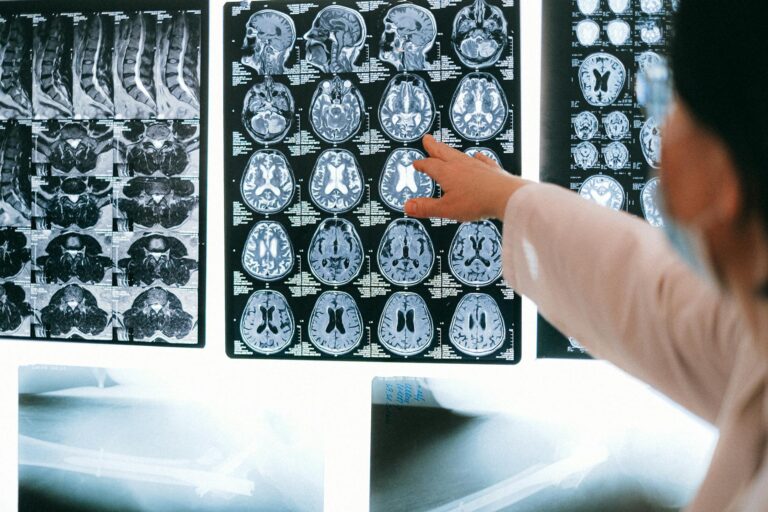
Pelizaeus-Merzbacher disease (PMD) is a rare genetic disorder that primarily affects the central nervous system, leading to a range of neurological symptoms. The symptoms arise because the disease disrupts the formation of myelin, the protective sheath around nerve fibers, which is essential for proper nerve signal transmission.
One of the earliest and most noticeable symptoms of PMD is **abnormal eye movements**, specifically nystagmus, which is characterized by involuntary, rapid, and repetitive eye movements. This often appears in infancy or early childhood and can be one of the first signs that something is wrong.
As the disease progresses, individuals typically experience **motor difficulties**. These can include:
– **Delayed motor development**, such as late sitting, crawling, or walking.
– **Muscle weakness** and poor muscle tone (hypotonia), making movements clumsy or uncoordinated.
– **Spasticity**, which is increased muscle stiffness or tightness, leading to difficulties in movement and walking.
– Some affected individuals may never achieve the ability to walk, while others may lose this ability over time.
Another common symptom is **ataxia**, which refers to problems with balance and coordination. This can make standing, walking, and other movements unstable and unsteady.
People with PMD often show **speech difficulties**, including delayed speech development and problems with articulation due to muscle control issues.
In addition to motor symptoms, **cognitive impairment** can occur, ranging from mild learning difficulties to more severe intellectual disability, depending on the severity of the disease.
Other neurological symptoms include:
– **Seizures** in some cases.
– **Muscle spasms** or involuntary movements.
– **Swallowing difficulties** (dysphagia), which can lead to feeding problems and increase the risk of aspiration.
Because PMD affects the central nervous system broadly, some individuals may also experience **problems with breathing** due to muscle weakness affecting respiratory muscles.
The severity and progression of symptoms can vary widely. Some individuals have a more severe form with early onset and rapid progression, while others have a milder form with slower progression and longer survival.
In summary, the symptoms of Pelizaeus-Merzbacher disease include abnormal eye movements (nystagmus), delayed motor development, muscle weakness, spasticity, ataxia, speech difficulties, cognitive impairment, seizures, muscle spasms, swallowing difficulties, and respiratory problems. These symptoms reflect the underlying problem of defective myelin formation in the nervous system, which disrupts normal nerve function.