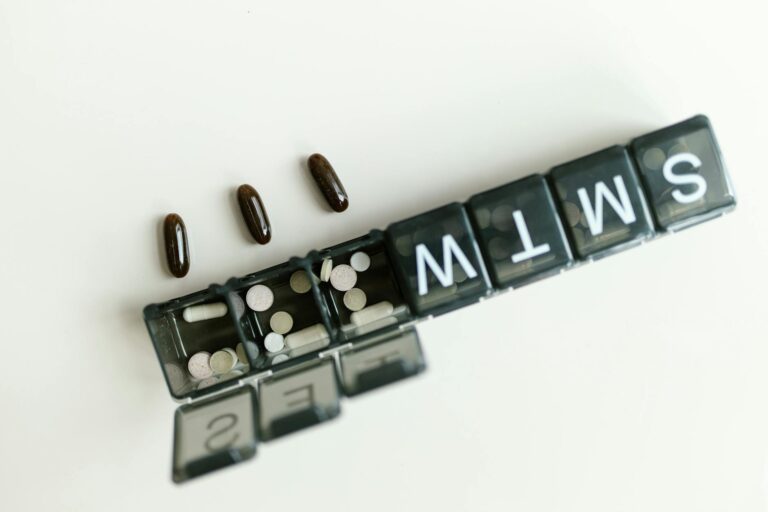
**Keeping Dementia Medications Safe and Effective**
Managing medications for someone with dementia requires extra care to avoid mistakes and ensure proper treatment. Here’s how to do it safely:
—
**1. Organize Medications Carefully**
Store all medicines in a **cool, dry place out of reach**, like a locked cabinet or high shelf[1][3]. Use pill organizers with **color-coded sections or labeled compartments** to simplify dosing schedules[3]. Double-check labels and doses before giving any medication, especially liquids—always use a measuring cup or syringe[1].
—
**2. Stick to Routines**
Give medications at the **same times daily**, linking them to meals or bedtime for consistency[3]. If swallowing pills is difficult, ask the doctor about **liquid forms, dissolvable tablets, or patches**[3].
—
**3. Watch for Side Effects Closely**
Dementia patients might not report discomfort. Look for sudden changes like **increased confusion, nausea, dizziness, or fatigue**[1][5]. Keep a daily log tracking when meds are taken and any reactions—share this with doctors during checkups[1][4].
—
**4. Work With Healthcare Providers Regularly**
Schedule frequent medication reviews to **simplify regimens and adjust doses as needed**[3][5]. Inform doctors about all prescriptions, over-the-counter drugs, and supplements being used to avoid dangerous interactions[5][4].
—
**5. Handle Emergencies Proactively**
If an overdose happens (signs include severe vomiting, slow heartbeat), seek emergency help immediately[5]. Dispose of expired medications properly—many pharmacies offer take-back programs[1][4].
By staying organized and alert caregivers can reduce risks while helping loved ones maintain better health outcomes.