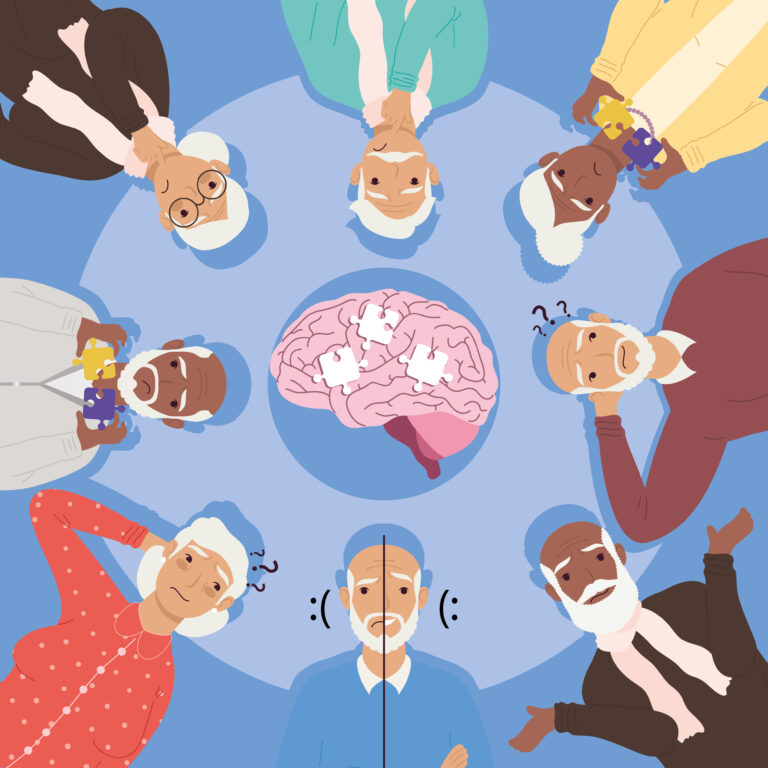
How caregivers can build trust during memory regression

Building trust with someone experiencing memory regression, such as in dementia or Alzheimer’s, requires patience, empathy, and consistent compassionate care. Caregivers can foster trust by creating a safe and familiar environment where the person feels valued and understood despite their…


Why small talk becomes more difficult with age-related decline

Small talk tends to become more difficult as people age due to a combination of cognitive, emotional, social, and physical changes that accompany aging. These factors can make the simple act of casual conversation feel more challenging or less appealing…

How routine meals reduce agitation in cognitive decline

Routine meals play a significant role in reducing agitation in individuals experiencing cognitive decline by providing consistent structure, stabilizing blood sugar levels, and delivering essential nutrients that support brain health and mood regulation. When people with cognitive impairment follow regular…

Why people with dementia may talk to themselves

People with dementia may talk to themselves for several interconnected reasons related to the changes dementia causes in the brain and behavior. This self-talk can serve as a coping mechanism, a way to express unmet needs, or a reflection of…

What a sudden shift in appetite may indicate

A sudden shift in appetite—whether a sharp increase or decrease—can be a significant signal from your body that something is changing internally, physically, or emotionally. Appetite is controlled by a complex interplay of hormones, brain signals, digestive health, and psychological…

Why Alzheimer’s changes how people process rhythm

Alzheimer’s disease profoundly changes how people process rhythm because it disrupts the brain systems responsible for timing, coordination, and the perception of patterns. Rhythm processing relies on a complex network involving memory, attention, motor control, and auditory perception—all areas that…

How scent cues can ground someone in reality

Scent cues have a remarkable ability to ground someone in reality by anchoring their mind and body to the present moment through deeply rooted sensory and emotional pathways. Our sense of smell is uniquely connected to the brain’s limbic system,…

Why memory patients misinterpret touch

Memory patients, especially those with conditions like dementia or certain brain disorders, often misinterpret touch because their brains struggle to process sensory information accurately and integrate it with memory and context. This misinterpretation is not intentional but arises from complex…

How caregivers can reduce light-based confusion

brain cells in dementia

Caregivers can reduce light-based confusion in individuals, especially those with dementia or cognitive impairments, by carefully managing lighting conditions and creating a supportive environment that minimizes shadows, glare, and abrupt changes in light. Light-based confusion often occurs when natural light…

What to do when a loved one doesn’t recognize you

When a loved one doesn’t recognize you, it can be deeply unsettling and painful. This situation often arises in the context of illnesses like dementia, Alzheimer’s disease, or other cognitive impairments, but it can also happen due to brain injury,…