How Accurate Is Reps in Reserve Under High Stress
When you’re lifting weights, one of the most useful tools for managing your training is the Reps in Reserve (RIR) scale. This method helps lifters understand how close they are to failure on any given set, which can guide how hard they should push during their workouts. But what happens when stress enters the picture? Does this reliable tool still work as well when your mind and body are under pressure?
Understanding Reps in Reserve
The RIR scale was developed in the early 2000s by Mike Tuchscherer, a powerlifter and founder of Reactive Training Systems. He modified the older Borg RPE scale to focus specifically on how many repetitions you could theoretically complete before reaching failure. For example, if you finish a set and feel like you could do three more reps, that’s an RIR of 3. If you could only do one more rep, that’s an RIR of 1.
This approach proved much more accurate than the original RPE scale, especially for trained lifters. Research showed that RIR-based RPE was strongly associated with barbell velocity and was much closer to maximum when performing one-rep max attempts in experienced lifters. The scale became a valuable tool for matching training load to what a lifter could actually handle, which is crucial for managing fatigue and making long-term progress.
How Stress Affects Decision Making and Performance
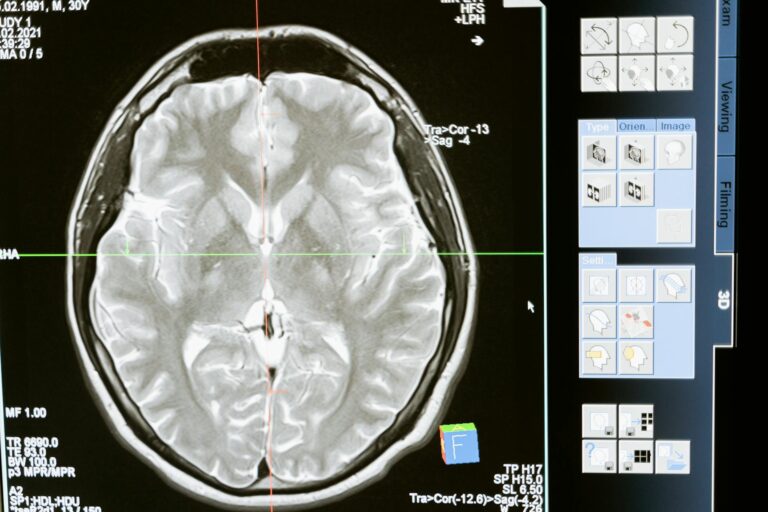
However, stress complicates things. Research has shown that acute stress can disrupt decision-making by affecting both cognitive and emotional processing. When your body experiences stress, your prefrontal cortex and other brain regions involved in executive function don’t work quite the same way. This means your ability to accurately judge how many reps you have left might be compromised.
The challenge is that under stress, your brain’s processing becomes less reliable. Your perception of effort, your sense of how close you are to failure, and your ability to make accurate judgments all become muddled. This is particularly problematic for RIR assessment because the entire system depends on your honest, accurate perception of your remaining capacity.
Experience Matters More Under Pressure
One key finding about RIR accuracy is that it works much better for experienced lifters than for novices. Experienced lifters have trained with the scale many times and have developed a strong sense of what different levels of fatigue feel like. They understand their own strength across different rep ranges and can more accurately predict their limits.
Under high stress, this experience becomes even more important. A trained lifter who has spent years learning to read their body might maintain reasonable accuracy even when stressed, because they have a deep baseline understanding of their capabilities. A newer lifter, however, would likely struggle even more under stress than they would in normal conditions.
The Practical Reality
In practical terms, RIR becomes less reliable under high stress. Your stressed nervous system is not in the best state to make fine judgments about your remaining capacity. You might overestimate how many reps you have left, leading you to push harder than intended. Or you might underestimate, being overly cautious when you could actually push more.
This doesn’t mean RIR becomes useless under stress. Rather, it means you should be aware that your assessments might be off. If you’re training during a stressful period in your life, you might want to be slightly more conservative with your RIR estimates. Instead of trusting that you have exactly 2 reps in reserve, you might assume you have 1 or 2 and adjust accordingly.
The Role of Stress Management
Interestingly, research into heart rate variability biofeedback suggests that athletes can improve their ability to regulate their physiological responses to stress. By learning to control your heart rate and breathing rate, you might be able to maintain better mental clarity and more accurate perception during training, even when stressed. This could help preserve the accuracy of your RIR assessments.
Practical Recommendations
If you’re training under high stress, consider these approaches. First, rely more on objective measures like barbell velocity and performance metrics rather than purely on your subjective RIR assessment. Second, be slightly more conservative with your estimates. Third, focus on stress management techniques that might help you maintain better cognitive function during your workouts. Finally, if you’re new to lifting, understand that RIR might be particularly unreliable for you during stressful periods, so consider working with a coach or using more objective training guidelines.
The bottom line is that RIR remains a useful tool even under stress, but its accuracy decreases. Your experience level, your stress management practices, and your willingness to adjust your approach all play roles in how well this system works for you during challenging times.
Sources