Repetitive Familiar Movements and Cognitive Anchoring: Understanding the Connection
When you tie your shoes every morning, your brain isn’t just executing a motor task. It’s engaging in a complex process that involves multiple neural systems working together. Recent neuroscience research suggests that the repetition of familiar movements may play a role in how our brains anchor information and create stable memories.
Cognitive anchoring refers to the mental process of fixing information in place so it doesn’t drift or get lost. Think of it like securing a boat to a dock. Without that anchor, the boat drifts with the current. Similarly, without proper anchoring, information we learn can fade or become confused with other memories. This is particularly important in learning environments where students need to retain spelling, vocabulary, and other foundational skills.
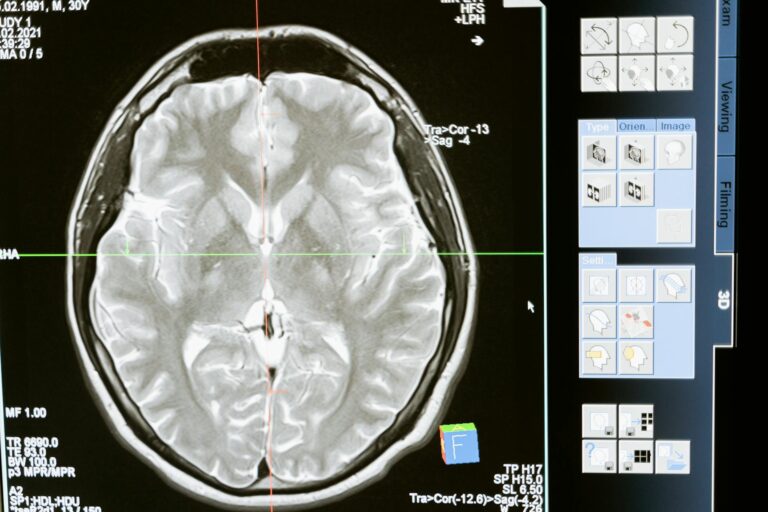
The brain’s motor system appears to be intimately connected with how we process and anchor information. When we perform repetitive movements, our primary motor cortex becomes active in specific patterns. Research examining brain activity during motor skill acquisition reveals that the ipsilateral motor cortex, which is the motor area on the same side of the brain as the moving limb, shows dynamic changes as we practice tasks. Before training, this region shows different activation patterns for simple versus complex tasks. However, after repeated practice, the brain reorganizes this activity, suggesting that repetition creates neural stability.
This neural reorganization may provide a foundation for cognitive anchoring. When movements become familiar through repetition, they require less conscious attention. This frees up cognitive resources that can be directed toward anchoring new information. For instance, when a child learns to write letters through repetitive practice, the motor movements become automatic. This automaticity allows the child’s brain to focus on anchoring the connection between the letter’s visual form and its meaning, rather than struggling with the physical act of writing.
The concept of anchoring in learning extends beyond motor skills. Language learners benefit from repeated exposure to words and their meanings. When learners encounter the same word multiple times in different contexts, the brain creates stronger connections between the word’s form and its meaning. This repeated exposure acts as a form of cognitive anchoring, securing the word in long-term memory. The same principle applies to spelling and written forms of language.
Interestingly, the brain’s response to repetition isn’t uniform across all types of tasks. Simple, familiar movements activate the motor system differently than complex, novel movements. As movements become more familiar through practice, the neural signature of that movement changes. The brain essentially learns to execute the movement more efficiently, which may reflect a process of neural anchoring where the motor pattern becomes firmly established in the brain’s circuitry.
This efficiency in motor execution has implications for learning beyond movement itself. When the motor system operates efficiently, it can support other cognitive processes. For example, handwriting is a motor skill that, when practiced repeatedly, becomes automatic. This automaticity then supports the cognitive process of anchoring spelling and orthographic knowledge. Students who struggle with handwriting must devote significant cognitive resources to the motor task, leaving fewer resources available for anchoring the meaning and correct form of words.
The relationship between repetitive movement and cognitive anchoring also appears in how we process time and numerical information. The brain uses anchoring mechanisms to judge durations and quantities. When we repeatedly perform timed movements or count objects through physical manipulation, we’re engaging both motor and cognitive systems. This engagement may strengthen the neural anchors that support our ability to estimate time and quantity accurately.
Digital technology has changed how we engage in repetitive movements and how this affects cognitive anchoring. When students use keyboards with autocorrect or voice dictation, they perform fewer repetitive motor movements associated with writing. This reduction in motor engagement may weaken the anchoring of orthographic knowledge because the brain receives less reinforcement through the motor system. The visual and motor feedback that comes from handwriting appears to be important for anchoring written forms in memory.
Teachers and educators are increasingly recognizing the importance of deliberate, repeated practice in anchoring information. Small-group instruction that allows for meaningful repetition and teacher feedback creates conditions where cognitive anchoring can occur effectively. When students repeatedly encounter information in meaningful contexts, with clear connections between form and meaning, the information becomes anchored in their long-term memory.
The practical implications of understanding the connection between repetitive movement and cognitive anchoring are significant. In educational settings, allowing time for repeated practice with clear feedback helps students anchor new information. In rehabilitation settings, repetitive movement training not only restores motor function but may also support cognitive recovery by reestablishing neural anchors that support memory and learning.
The brain’s motor system and cognitive system are not separate entities but rather deeply interconnected. Repetitive familiar movements create neural efficiency in the motor system, which in turn supports cognitive processes like anchoring. This understanding suggests that physical practice and cognitive learning are not distinct activities but rather complementary processes that work together to create stable, retrievable memories and skills.
Sources
https://www.frontiersin.org/journals/neuroscience/articles/10.3389/fnins.2025.1681250/full
https://pmc.ncbi.nlm.nih.gov/articles/PMC12589306/