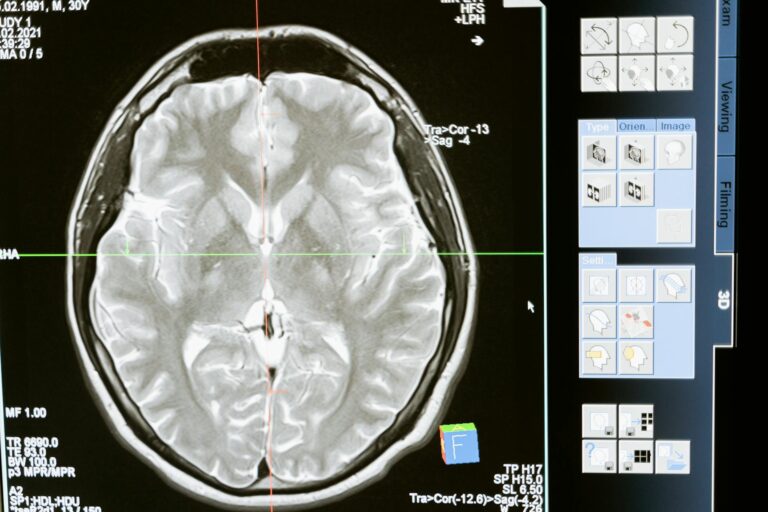
Health tracking has the potential to improve predictions about brain aging by providing early and personalized insights into cognitive decline risks. Recent advances in brain health research show that combining various health data—such as genetic information, brain imaging, and lifestyle factors—can help identify individuals at higher risk of neurodegenerative diseases like Alzheimer’s years before symptoms appear.
One significant development comes from researchers at the Mayo Clinic, who created a predictive tool that estimates the likelihood of developing mild cognitive impairment or Alzheimer’s-related dementia. This model uses decades of brain health tracking data, including age, sex, genetic markers (notably the APOE ε4 gene), and brain amyloid levels measured by PET scans. Amyloid plaques are a hallmark of Alzheimer’s disease, and higher amyloid levels strongly correlate with increased risk of cognitive decline. By integrating these factors, the tool can provide personalized risk scores for both the next 10 years and over a lifetime, enabling earlier intervention and lifestyle adjustments[1][3].
Beyond genetic and imaging data, other health tracking methods are emerging as valuable for brain aging predictions. For example, magnetic resonance elastography (MRE), a technique that measures the mechanical properties of brain tissue, has shown promise in detecting early neurodegenerative changes. Studies indicate that MRE combined with advanced machine learning can predict brain age more accurately than traditional MRI scans. This approach identifies subtle biomechanical changes in brain regions critical for cognition, potentially flagging individuals who appear cognitively normal but have brain signatures similar to those with mild cognitive impairment or Alzheimer’s[2].
Additionally, monitoring everyday behaviors such as speech patterns offers a non-invasive way to track cognitive health. Artificial intelligence analysis of natural speech can detect subtle linguistic changes linked to executive function decline, which is an early marker of dementia risk. Speech is easy to collect frequently and without stress, making it a scalable tool for early detection and ongoing monitoring of brain aging[5][7].
Cardiovascular health tracking also plays a role in predicting brain aging. Research shows that poorer heart health in middle age, indicated by markers like elevated cardiac troponin levels, is associated with increased risk of dementia later in life. Brain scans of individuals with heart damage reveal brain aging equivalent to being several years older, suggesting that heart health monitoring can contribute to understanding and predicting cognitive decline[6].
Furthermore, brain metabolism and blood flow changes detected through imaging techniques such as PET and arterial spin-labeled MRI scans provide additional predictive information. These scans reveal region-specific and stage-specific alterations in brain function that precede irreversible damage in Alzheimer’s disease. Tracking these neurovascular and metabolic changes can help identify the progression of cognitive impairment at earlier stages[4].
In summary, health tracking that integrates genetic data, brain imaging, biomechanical properties, speech analysis, and cardiovascular health offers a multifaceted approach to improving brain aging predictions. These tools enable earlier identification of individuals at risk, potentially allowing for timely interventions that could slow or alter the course of cognitive decline.
Sources
https://timesofindia.indiatimes.com/life-style/health-fitness/health-news/alzheimers-disease-groundbreaking-new-tool-could-identify-the-risk-years-before-symptoms-arise/articleshow/125361599.cms
https://pmc.ncbi.nlm.nih.gov/articles/PMC12616099/
https://www.medicalnewstoday.com/articles/new-tool-predicts-future-alzheimers-memory-risk-age-genetics
https://www.medicalnewstoday.com/articles/brain-changes-blood-flow-metabolism-help-predict-alzheimers-stages-dementia
https://neurosciencenews.com/speech-cognitive-decline-29922/
https://www.ucl.ac.uk/news/2025/nov/poorer-heart-health-middle-age-linked-increased-dementia-risk
https://www.psypost.org/the-rhythm-of-your-speech-may-offer-clues-to-your-cognitive-health/