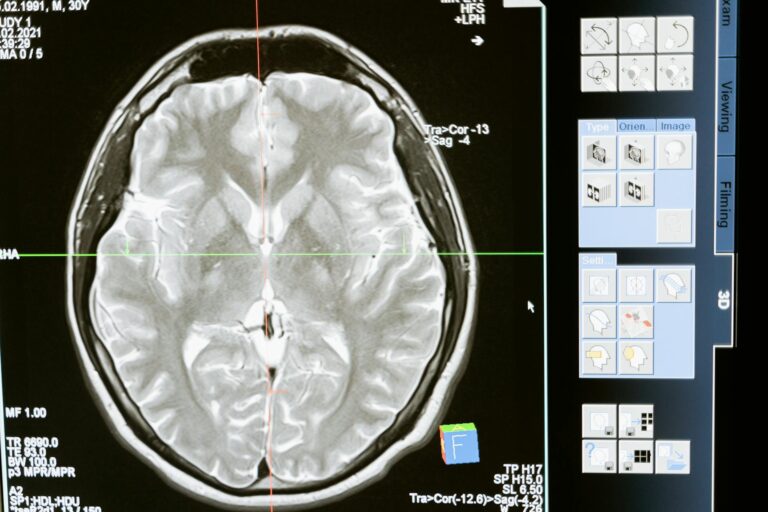
Your hearing and your brain are more connected than you might think. Recent research shows that taking care of your hearing could be one of the most important things you do to protect your mind as you age.
Scientists have discovered that people with hearing loss experience changes in their brains that look like the early stages of dementia. When someone in their 50s has even mild hearing problems, their brain already shows signs of aging. The brain gets smaller in certain areas, and the connections between different brain regions start to weaken. These changes happen years before someone might actually develop memory problems or dementia.
The numbers are striking. People with more than slight hearing loss in midlife have a 70 percent higher risk of developing Alzheimer’s disease or other forms of dementia later in life. For those who carry a specific gene called APOE-E4, which makes dementia more likely, the risk jumps even higher. People with this gene and midlife hearing loss can see their dementia risk nearly triple.
Why does hearing loss affect the brain so much? When someone cannot hear well, their brain has to work much harder to process sound. This extra effort pulls resources away from memory and thinking skills. At the same time, hearing loss often leads people to withdraw from social activities. They stop going to gatherings, talking with friends, or participating in group activities. This social isolation makes cognitive decline even worse.
The good news is that treating hearing loss appears to slow down this process. People who wear hearing aids or get cochlear implants to improve their hearing can significantly reduce their dementia risk. For those carrying the APOE-E4 gene, using hearing aids made a real difference in protecting their brain health.
Doctors are now paying more attention to hearing as a key part of brain health. When older adults come in concerned about memory loss or cognitive decline, physicians are recommending hearing tests and hearing aids as preventive measures. Some people who thought they just had normal aging are discovering that better hearing actually helps them think more clearly and stay more engaged with life.
The connection between hearing and thinking works both ways. Good hearing keeps your brain active and engaged. It helps you stay connected to other people. It reduces the strain on your brain from trying to understand speech. All of these things together protect your mind from decline.
If you are noticing that you cannot hear as well as you used to, getting your hearing checked is not just about comfort. It is about protecting your brain. Hearing aids and other hearing treatments are not just devices to help you hear better in the moment. They are investments in your long-term brain health and your ability to stay sharp as you age.
The research makes it clear that hearing care is brain care. Taking action early, even with mild hearing loss, gives your brain the best chance to stay healthy and active for years to come.
Sources
https://www.alzinfo.org/articles/diagnosis/brain-risks-of-hearing-loss-may-start-early/
https://jamanetwork.com/journals/jamanetworkopen/fullarticle/2841000
https://pmc.ncbi.nlm.nih.gov/articles/PMC12590305/
https://heal-wa.org/hearing-loss-and-cognitive-decline/