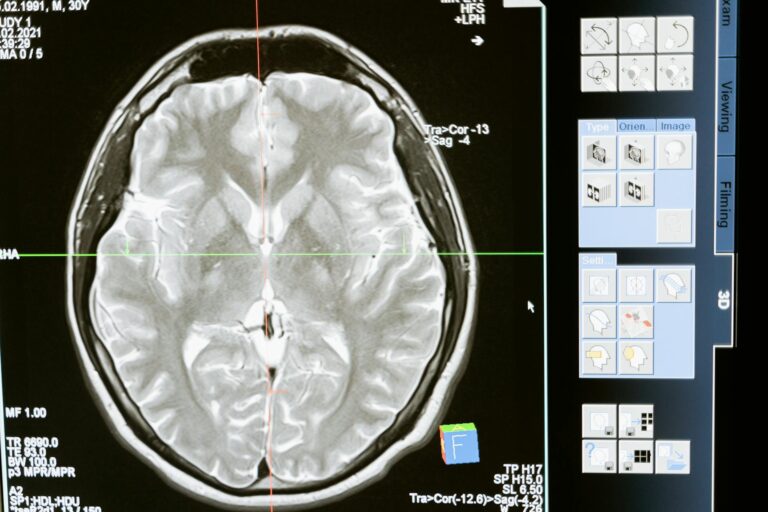
Parenchymal volume loss refers to a decrease in the volume of the brain’s parenchyma, which includes both the gray matter and white matter tissues. The brain parenchyma is essentially the functional tissue of the brain, responsible for processing and transmitting information. When volume loss occurs, it means that some of this brain tissue has shrunk or atrophied, which can be a sign of damage or degeneration.
This volume loss can be detected through imaging techniques like magnetic resonance imaging (MRI), where doctors measure the size of different brain regions over time. Parenchymal volume loss is often associated with various neurological conditions such as Parkinson’s disease, multiple sclerosis, dementia, and other neurodegenerative disorders. For example, in Parkinson’s disease, certain brain regions involved in motor and cognitive functions show volume loss as the disease progresses. Similarly, in multiple sclerosis, brain atrophy measured as parenchymal volume loss is an important marker of disease progression and disability[1][2].
The loss of brain parenchymal volume can result from several causes, including cell death, loss of nerve fibers, or damage to the supporting structures of the brain. It may lead to symptoms like memory problems, difficulty with movement, or cognitive decline, depending on which brain areas are affected. The extent and pattern of volume loss can vary widely between diseases and individuals.
In clinical practice, measuring parenchymal volume loss helps doctors understand the severity and progression of brain diseases. It also aids in evaluating the effectiveness of treatments aimed at slowing down brain tissue loss. However, some volume loss can also occur naturally with aging, so doctors compare the rate of loss to what is expected for a person’s age to determine if it is abnormal[2][3].
Sources
https://www.frontiersin.org/journals/human-neuroscience/articles/10.3389/fnhum.2025.1666556/full
https://pmc.ncbi.nlm.nih.gov/articles/PMC12540578/
https://alz-journals.onlinelibrary.wiley.com/doi/10.1002/alz.70699