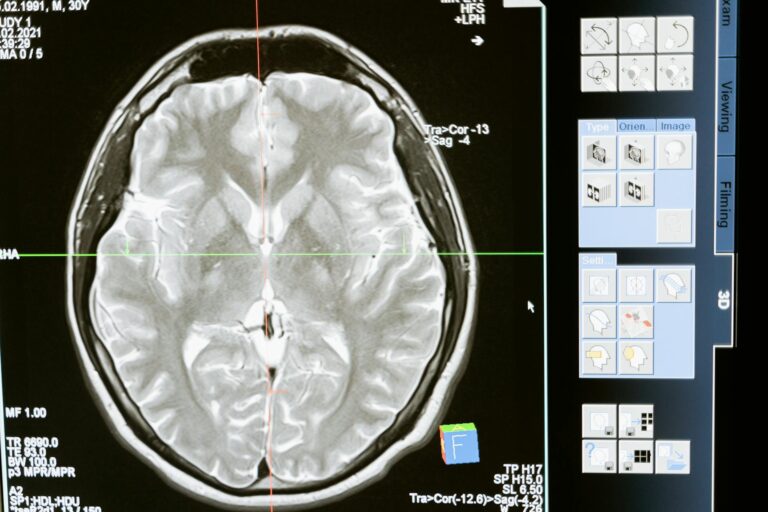
A new kind of dementia test is making waves because it only takes five minutes and uses virtual reality and artificial intelligence. Instead of long questionnaires or complicated exams, this test tracks how a person’s eyes move while they look at images or solve problems in a VR headset. The idea is that the way someone’s eyes move can reveal early signs of cognitive decline, even before memory problems become obvious.
Researchers tested this method on adults between 55 and 75 years old. Each person took both the new VR test and the standard MoCA test, which is a widely used paper-and-pencil exam for dementia screening. The results showed that the VR test was just as accurate as the MoCA test. For every 10 people the MoCA test flagged as having mild cognitive impairment, the VR test caught 9. For every 10 people with no cognitive problems, the VR test correctly identified 8. This means the VR test is about as good as the traditional method, but much faster and easier to use.
One of the big advantages of the VR test is that it can adjust for differences in education. People with less schooling often score lower on traditional tests, even if they don’t have dementia. The VR test accounts for this by using different scoring rules for different education levels. The test also focuses on tasks that involve memory, calculation, and problem-solving, which are strong indicators of cognitive health.
Other studies have looked at different digital tools for dementia screening. Some use machine learning to analyze brain activity or movement patterns. These tools have shown similar accuracy, with sensitivity and specificity rates around 88%. That means they are good at spotting people who do have mild cognitive impairment and at ruling out those who don’t. However, most of these studies are still in the early stages, and more research is needed to make sure the results hold up across different groups of people.
Some digital screeners, like the Creyos test, are designed to be quick and easy. They can detect subtle signs of dementia in less than five minutes and don’t require special training to interpret. These tools are meant to help doctors decide if a person needs a more detailed evaluation, not to give a final diagnosis. They are also less stressful for patients, since they don’t take hours to complete and don’t feel like a traditional exam.
While these new tests are promising, they are not perfect. Most studies have only been done in specific locations, so it’s not clear if the results will be the same in other countries or cultures. Some older adults may also find VR headsets unfamiliar or uncomfortable. And because many of these tools are trained using data from traditional tests, any flaws in those tests could affect the results.
Sources
https://cogbites.org/2025/11/03/eyes-on-the-mind-how-vr-and-ai-could-revolutionize-dementia-screening/
https://www.frontiersin.org/journals/psychology/articles/10.3389/fpsyg.2025.1606562/full
https://pmc.ncbi.nlm.nih.gov/articles/PMC12603861/
https://creyos.com/blog/neuropsychological-testing
https://pmc.ncbi.nlm.nih.gov/articles/PMC12569398/
https://journals.sagepub.com/doi/10.1177/07334648251394486