Sanfilippo syndrome, also known as mucopolysaccharidosis type III (MPS III), is caused by genetic mutations that lead to a deficiency in specific enzymes responsible for breaking down complex sugar molecules called glycosaminoglycans (GAGs), particularly heparan sulfate. These enzymes normally work inside lysosomes, which are compartments within cells that digest and recycle various substances. When these enzymes are missing or not functioning properly due to mutations, partially degraded heparan sulfate accumulates inside lysosomes, especially in brain cells, causing progressive damage.
There are four subtypes of Sanfilippo syndrome—A, B, C, and D—each caused by mutations in different genes encoding distinct enzymes involved in the stepwise breakdown of heparan sulfate. For example:
– **Type A** results from mutations in the *SGSH* gene on chromosome 17. This gene encodes the enzyme N-sulfoglucosamine sulfohydrolase (also called sulfamidase). When this enzyme is deficient or defective due to genetic changes, it cannot remove sulfate groups from heparan sulfate molecules during degradation.
– **Type B** arises from defects in the *NAGLU* gene encoding alpha-N-acetylglucosaminidase.
– **Type C** involves mutations affecting the *HGSNAT* gene coding for acetyl-CoA:alpha-glucosaminide N-acetyltransferase.
– **Type D** is linked to changes in the *GNS* gene responsible for encoding N-acetylglucosamine 6-sulfatase.
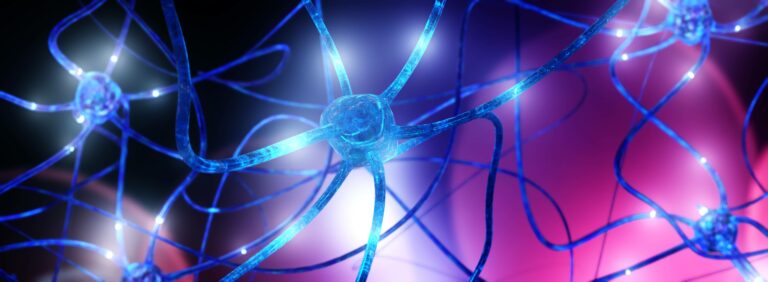
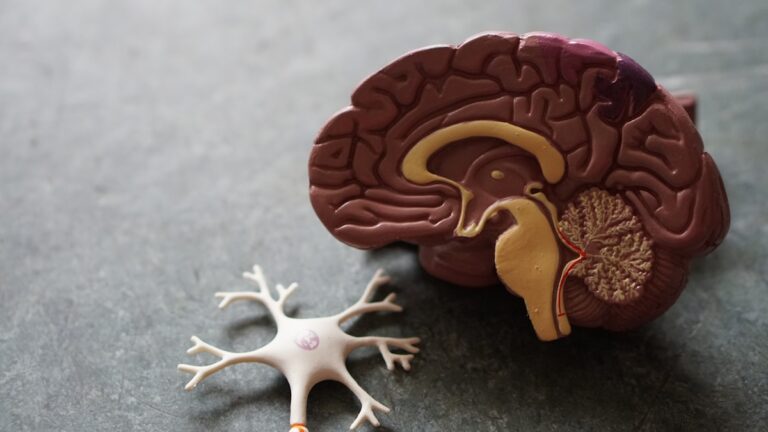
These enzyme deficiencies cause an accumulation of undegraded or partially degraded heparan sulfate within lysosomes throughout various tissues but predominantly affect neural tissue. The buildup disrupts normal cellular functions such as protein folding and autophagy (the process by which cells clear damaged components). It also triggers inflammation through increased levels of inflammatory molecules like interleukin-6 and leads to abnormal neural development processes including impaired neuron growth and synapse formation. Over time this causes progressive neurodegeneration characterized by cognitive decline, behavioral problems, motor dysfunctions, and other neurological symptoms typical of Sanfilippo syndrome.
The inheritance pattern is autosomal recessive; a child must inherit two defective copies of one of these genes—one from each parent—to develop the disease. Carriers with only one mutated copy typically do not show symptoms but can pass on the mutation to their offspring.
At a molecular level:
– The *SGSH* gene spans about 11 kilobases on chromosome 17q25.3 and encodes a protein made up of 502 amino acids with several sites important for its function such as glycosylation sites necessary for proper folding and activity.
– Mutations can be diverse: missense changes altering single amino acids; nonsense mutations creating premature stop signals; deletions removing parts of DNA; or splice site alterations affecting how RNA transcripts are processed into functional proteins.
Because these enzymes act sequentially during degradation steps inside lysosomes, loss-of-function mutations at any point cause incomplete breakdown leading to toxic storage material accumulation primarily impacting brain cells but also other organs over time.
In summary: Sanfilippo syndrome originates from inherited genetic defects that impair specific lysosomal enzymes needed for degrading heparan sulfate chains within cells. This enzymatic block causes harmful buildup disrupting cellular health especially in neurons resulting in severe neurological deterioration characteristic of this rare metabolic disorder.