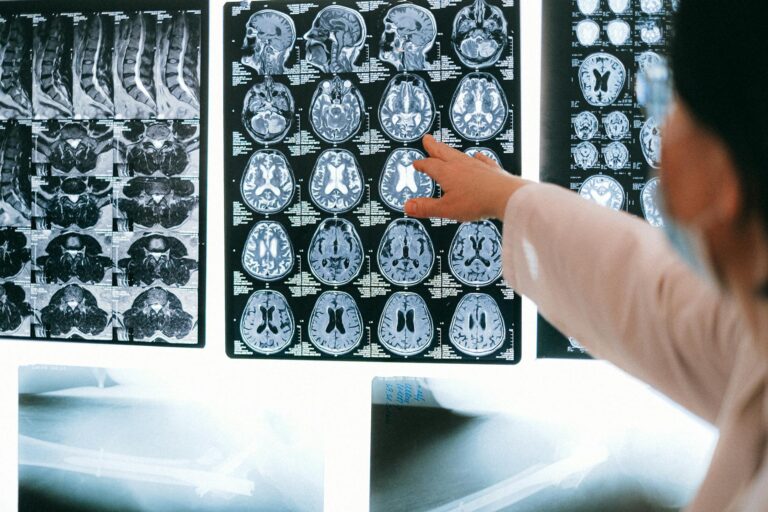
Dementia patients often struggle with depth perception because dementia affects the brain areas responsible for processing visual information, spatial awareness, and interpreting the environment. Depth perception is the ability to judge how far away objects are and to understand their position in three-dimensional space. This skill relies on complex brain functions that integrate signals from both eyes and interpret them correctly.
In dementia, especially types like Alzheimer’s disease or frontotemporal dementia, there is progressive damage and shrinkage in parts of the brain such as the frontal lobe, temporal lobe, and parietal lobe. These regions are crucial for visual processing and spatial reasoning. When these areas deteriorate due to neurodegeneration, it becomes harder for individuals to accurately perceive distances or judge where objects are relative to themselves or other things around them.
One reason this happens is that dementia disrupts how sensory information from the eyes is sent to and interpreted by the brain. Even if a person’s eyes physically see an object clearly, their brain may not process this input properly. The integration of signals from both eyes (binocular vision), which helps create a sense of depth through slight differences in images seen by each eye (stereopsis), can be impaired when neural pathways degrade.
Additionally, cognitive decline affects memory and attention systems that support spatial awareness. For example, remembering where furniture is placed or recognizing familiar environments helps people navigate safely without bumping into things or misjudging steps. Dementia impairs these abilities too — making it difficult not only to see depth but also to use past experience in guiding movement.
This difficulty with depth perception contributes significantly to common problems faced by those with dementia:
– Increased risk of falls: Misjudging stairs or uneven surfaces leads many patients to stumble.
– Wandering behavior: Confusion about surroundings can cause disorientation.
– Trouble performing daily tasks: Activities requiring hand-eye coordination like pouring liquids become challenging.
– Anxiety related to navigating spaces: Uncertainty about distance creates fear when moving around.
Visual changes linked with specific types of dementia also play a role; for instance, frontotemporal dementia causes shrinking in lobes involved in understanding visual cues which worsens interpretation beyond just memory loss alone.
In summary, struggling with depth perception among people living with dementia arises primarily because neurodegenerative changes impair how their brains receive and process visual-spatial information combined with declines in memory and cognition needed for safe navigation through space. This combination makes everyday environments more confusing and hazardous than they would be otherwise.