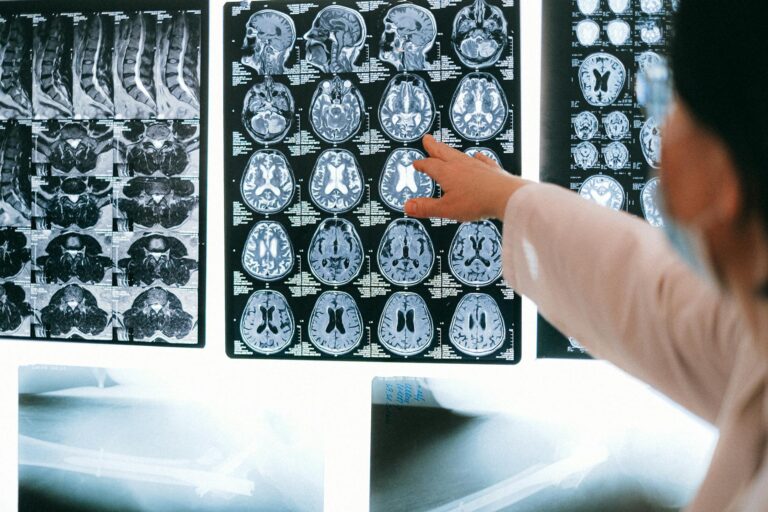
Alzheimer’s disease, at its core, is a profound lesson about the fragile nature of memory and the deep connection between memory and meaning in human life. It teaches us that memory is not just a simple storage of facts or events but a complex, living process that shapes our identity, our understanding of the world, and the meaning we derive from our experiences.
Memory in Alzheimer’s is not just lost; it is transformed. Early in the disease, subtle changes occur in the brain’s wiring, such as the degeneration of nerve fibers that connect critical regions involved in sensing and processing information. For example, the loss of smell often appears early because the nerve connections between the locus coeruleus—a brainstem area involved in attention and arousal—and the olfactory bulb begin to deteriorate. This loss is not random but reflects how Alzheimer’s disrupts the brain’s communication networks, leading to a breakdown in how sensory information is integrated and remembered.
This early disruption shows us that memory is deeply tied to sensory experience and neural connectivity. When these connections falter, the brain’s ability to encode and retrieve memories weakens. The disease also triggers abnormal cellular signals that mark neurons for removal by the brain’s immune cells, further eroding the physical basis of memory. This process reveals how memory depends on the health and activity of neurons, and how their dysfunction can lead to the gradual fading of personal history.
At a molecular level, Alzheimer’s teaches us about the delicate balance of proteins that support memory. The disease is marked by the buildup of amyloid-beta plaques and tau tangles, which interfere with neuron function. These proteins are produced through complex genetic mechanisms, including alternative splicing, which can create different versions of key proteins. When this process goes awry, it can lead to the toxic forms that accumulate in Alzheimer’s, showing us that memory depends not only on neurons but also on the precise regulation of molecular processes within them.
The disease also highlights the critical role of energy in memory. Neurons are among the most energy-demanding cells in the body, relying on mitochondria to fuel their activity. Alzheimer’s impairs mitochondrial function, leading to energy shortages that prevent neurons from communicating effectively. This connection between energy metabolism and memory underscores that remembering is an active, energy-intensive process, not a passive storage of information.
Beyond the biological, Alzheimer’s reveals the profound link between memory and meaning. As memories fade, so does the sense of self and continuity that gives life coherence. The loss of autobiographical memory—the stories we tell ourselves about who we are—shows that memory is the foundation of personal identity. Without it, meaning becomes fragmented, and the world loses its familiar shape.
Yet, Alzheimer’s also teaches us about resilience and the different ways meaning can persist. Even as explicit memories vanish, emotional memories and nonverbal forms of connection often remain. People with Alzheimer’s may forget names or events but still respond to music, touch, or familiar faces, suggesting that memory and meaning are layered and multifaceted.
The ongoing research into Alzheimer’s offers hope and insight. Scientists are exploring ways to detect the disease early, before irreversible damage occurs, by identifying subtle changes in brain circuits and molecular markers. Treatments aimed at restoring mitochondrial function or clearing toxic proteins show promise in preserving memory and meaning. Even the role of minerals like lithium is being investigated for their potential to reduce harmful protein buildup and improve cognitive function.
In essence, Alzheimer’s teaches us that memory is a dynamic interplay of neurons, molecules, energy, and experience. It is not just about recalling facts but about maintaining the connections that make life meaningful. The disease’s devastating effects remind us how precious and delicate these connections are, and how deeply memory shapes who we are. Through understanding Alzheimer’s, we gain a clearer picture of memory’s complexity and the profound ways it weaves meaning into the fabric of human existence.