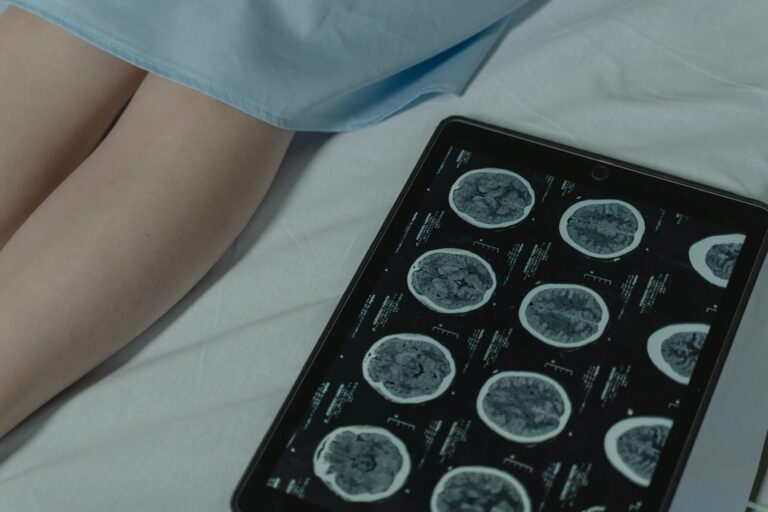
Advances in MRI Techniques for Studying Dementia
Dementia, particularly Alzheimer’s disease, is a complex and progressive condition affecting millions worldwide. Recent advancements in Magnetic Resonance Imaging (MRI) have significantly improved our ability to study and diagnose dementia. These new techniques not only help in early detection but also provide insights into the disease’s progression, potentially leading to better treatments.
### Diffusion Tensor Imaging (DTI)
One of the most promising MRI techniques is Diffusion Tensor Imaging (DTI). DTI assesses the condition of the brain’s white matter by measuring how water molecules move along nerve fibers. This method can identify damage to these fibers, which is often associated with cognitive problems. Researchers have found that people who develop Alzheimer’s disease have lower fractional anisotropy (FA) values, indicating damaged white matter tracts. Using DTI, scientists have achieved an impressive accuracy of up to 95% in predicting who will develop Alzheimer’s, outperforming traditional methods like cognitive tests and genetic screening[1].
### Structural MRI (sMRI)
Structural MRI (sMRI) is another valuable tool in diagnosing dementia. It can detect early changes in brain structures, such as the hippocampus, which are critical for memory. By analyzing the volume of these structures, sMRI can predict cognitive decline with high accuracy. However, while sMRI is excellent for detecting structural changes, it lacks the ability to directly visualize the molecular hallmarks of Alzheimer’s disease, such as amyloid plaques and tau tangles[3].
### Functional MRI (fMRI)
Functional MRI (fMRI) offers insights into brain activity by measuring changes in blood flow. It can show how different parts of the brain communicate with each other, which is crucial for understanding the functional changes in Alzheimer’s disease. fMRI has been used to study how brain networks are affected in Alzheimer’s, revealing patterns of reduced connectivity in certain areas. Despite its potential, fMRI’s application is limited by its sensitivity to movement and lower temporal resolution compared to other imaging techniques[3].
### Future Directions
The integration of MRI with other imaging modalities, such as PET scans, can enhance diagnostic accuracy. Additionally, advances in computational methods and machine learning are being explored to improve the analysis of MRI data, potentially leading to more personalized treatments. Researchers like Michael I. Miller are using enhanced MRI techniques to map changes in the brain over time, linking these changes to molecular markers of Alzheimer’s disease. This work aims to develop early diagnostic and therapeutic approaches that could revolutionize how we manage dementia[5].
In summary, MRI techniques have become indispensable in the study of dementia. From DTI’s ability to predict Alzheimer’s with high accuracy to sMRI’s detection of structural changes and fMRI’s insights into brain function, these advancements are paving the way for earlier detection and potentially more effective treatments. As research continues to evolve, the hope is that these techniques will not only improve diagnosis but also guide the development of preventive treatments that target the disease before symptoms appear.